
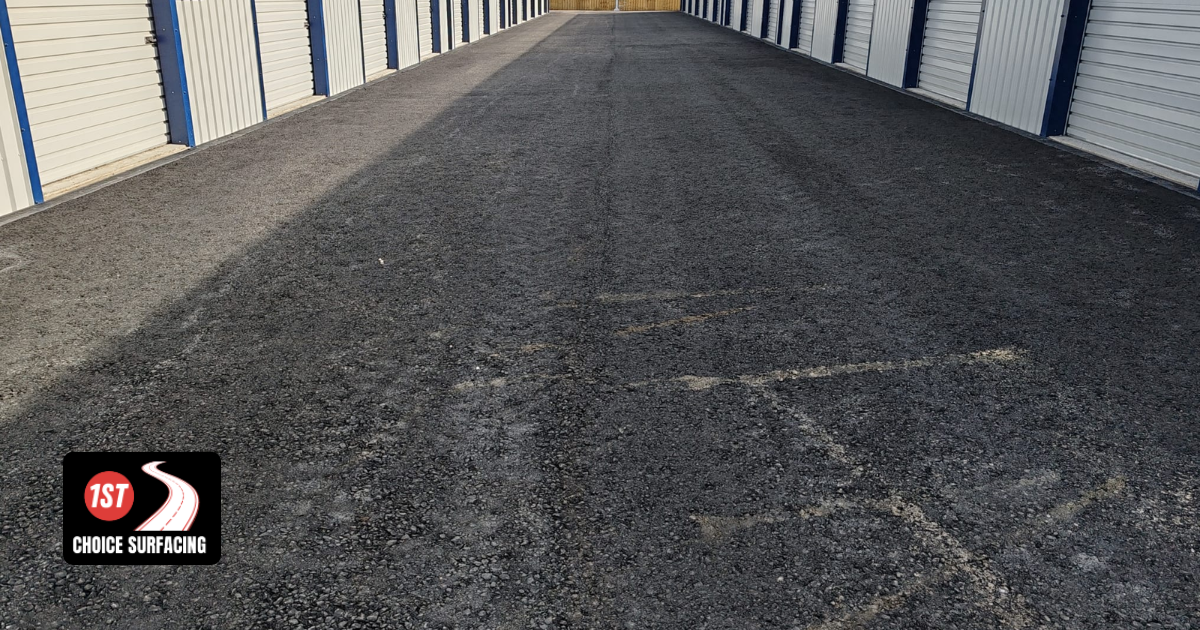
A tired car park tells customers something about your business before they reach the door. Potholes, faded bay lines and standing water also put you at risk of trip claims and vehicle damage complaints. This guide covers what commercial car park resurfacing costs, which materials suit which sites, and how to plan the work so it doesn’t hurt trading. It’s written for property managers, retailers, schools, offices and industrial site owners across Leeds, Bradford, Wakefield, Huddersfield and Halifax.
When Does a Car Park Need Resurfacing?
- Alligator (crazing) cracks and potholes that keep coming back after patching
- Ponding water, which points to failed drainage or surface dips
- Ravelling, where loose stone works out of the surface
- Faded markings and worn disabled bays
- Rutting in HGV lanes or bin-lorry routes
A single pothole can be patched. When defects spread across more than roughly 20-30% of the surface, resurfacing is usually cheaper than repeated repairs.
Overlay, Patch Repair or Full Reconstruction?
The right option depends on what’s happening beneath the surface.
- Patch repair suits isolated failures on an otherwise sound car park.
- Overlay (surface course resurfacing) means planing off the worn layer or laying new asphalt over a stable base. It’s the most common choice for ageing but structurally sound car parks.
- Full reconstruction means excavating to the sub-base and rebuilding. You need it when the base has failed, usually shown by deep rutting, widespread cracking or repeated pothole returns.
A good contractor will core or inspect the site before recommending anything. Be wary of anyone quoting a full overlay without looking at the base.
Commercial Car Park Resurfacing Costs
These are indicative average prices based on London rates in 2026, excluding VAT. Your final quote depends on your site.
Work | Average cost |
Patch repairs | £60-£120 per m² |
Tarmac overlay (planing and resurfacing) | £28-£48 per m² |
Full reconstruction | £60-£100 per m² |
Line marking and bay repainting | £8-£15 per bay |
Drainage and gully repairs | £150-£600 per gully |
Kerbing | £35-£70 per linear metre |
As a rough guide, a 500 m² car park (around 20 bays) typically costs £14,000-£24,000 for an overlay, and £30,000-£50,000 for full reconstruction.
What affects the price:
- Total area, since larger jobs lower the cost per m²
- Sub-base condition and the depth of excavation
- Drainage, lighting and kerb work
- Access, working hours and phasing
- Traffic loading, such as cars versus HGVs
- Disposal of old material and the price of bitumen
Best Materials for Commercial Car Parks
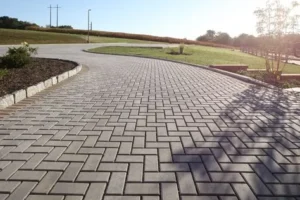
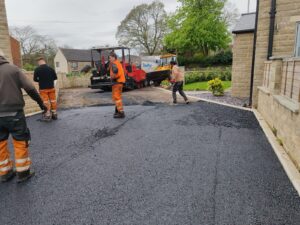
It is the standard commercial choice. It’s durable, quick to lay, easy to repair and cost-effective. Dense bitumen macadam (DBM) base layers with an asphalt wearing course handle heavy traffic well.
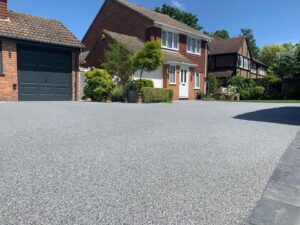
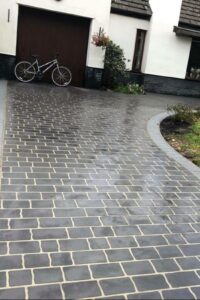
It gives a smooth, decorative finish for hotels, showrooms and offices. It costs more but looks premium and lasts well on the right base.
It lets rainwater drain through, helping with surface water rules and flooding. It’s increasingly requested on new developments.
It work for heavy-duty yards and high-end sites, but cost more upfront and take longer to lay.
For most retail, office and industrial car parks in West Yorkshire, tarmac remains the best balance of cost, lifespan and maintenance. Properly laid, it can last 15-25 years.
Planning Your Car Park Resurfacing Project
Good planning protects both your budget and your trade.
- Get a site survey. An experienced contractor will assess the surface, base and drainage, and measure the area accurately.
- Check planning and drainage rules. Larger or changed hard-surfaced areas may need to meet SuDS requirements. Ask your contractor and local authority early.
- Phase the works. Splitting the car park into sections lets you keep part of it open. This matters most for shops, schools and workplaces.
- Pick the right season. Asphalt lays best in dry, mild weather, so April to October is ideal in Yorkshire. Winter work is possible but riskier.
- Plan the communications. Tell staff, tenants and customers about closures, alternative parking and reopening dates.
- Allow cure time. Most tarmac car parks can reopen to cars within 24 hours, but heavy vehicles may need longer.
A typical small to mid-sized car park takes 2-5 days, while larger or reconstructed sites can take 1-3 weeks.
How to Choose a Commercial Surfacing Contractor
Look for a contractor who:
- Visits your site before quoting, rather than quoting from a phone call
- Gives an itemised quote covering excavation, materials, drainage and line marking
- Holds public liability insurance and can show recent commercial references
- Offers a written guarantee on workmanship
- Explains the build-up (depths of base, binder and wearing course) in plain English
The cheapest quote often leaves out drainage or base repairs, then adds them back as extras.
Get a Free Car Park Resurfacing Quote in West Yorkshire
1st Choice Surfacing handles commercial car park resurfacing, repairs, drainage and line marking across West Yorkshire. Call or request a free site survey and itemised quote today.
Also Read: Cracks, Potholes, or Drainage Issues? Why You Need Professional Car Park Surfacing Contractors
Frequently Asked Questions
How long does resurfacing last?
Commercial tarmac usually lasts 15-25 years with sensible maintenance, such as crack sealing and regular sweeping.
Can the car park stay open during the work?
Often, yes. phased works keep part of the site live.
Is resurfacing better than patching?
Patching is cheaper in the short term. Once failures spread, resurfacing gives better value.
When should I get a quote?
Before winter damage gets worse, ideally late winter or early spring, so you can book a dry-season slot.