
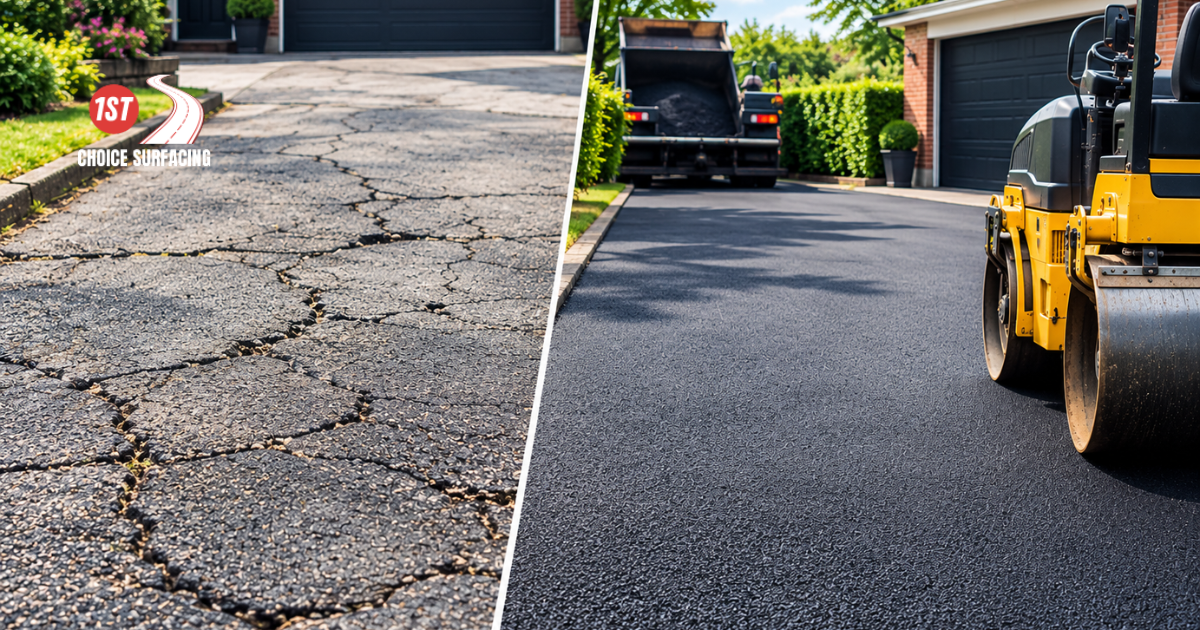
Cracks, puddles and a surface that looks tired. Sooner or later every tarmac driveway raises the same question: do you resurface it, or rip it up and start again? Get it right and you save money and add years of life. Get it wrong and you pay twice. This guide explains the difference between tarmac driveway resurfacing and full replacement, how to read the warning signs, and how to choose the right option for your London property.
What Is Tarmac Driveway Resurfacing?
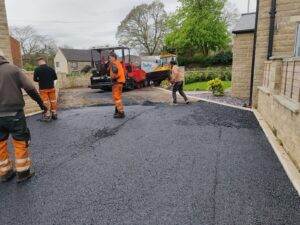
Resurfacing keeps your existing base and adds a new wearing course of tarmac on top. The contractor cleans the surface, repairs cracks and potholes, applies a bond coat, then lays and rolls fresh tarmac, often 25–40mm thick. It works when the sub-base underneath is still solid. Think of it as renewing the top coat rather than rebuilding the structure. It is quicker, creates less waste and usually costs less, which is why most people ask about it first.
What Does Full Tarmac Driveway Replacement Involve?
Replacement means digging out the old tarmac and, where needed, the sub-base beneath it. The team then corrects levels and drainage, lays and compacts a new sub-base, and finishes with new binder and wearing courses. It is a bigger job, but it fixes problems at the root. If the foundation has failed, no amount of fresh surface will hold.
Signs Your Driveway Only Needs Resurfacing
Resurfacing is usually the right call when:
- The surface looks faded, dry, or crumbly, with loose stones
- Cracks are fine or shallow and not spreading
- There are a few small potholes or patches
- The ground feels firm and level underfoot
- Rain runs off towards a drain instead of pooling
Signs You Need Full Driveway Replacement
Replacement makes more sense when you see:
- Deep, wide or interconnected “crocodile” cracking
- Dips, ruts or sagging where cars park
- Potholes that keep coming back after repairs
- Standing water that lingers for days
- Tree roots lifting or splitting the surface
- An earlier resurfacing layer that is already failing
Cracks that return within a year or two of a patch repair usually point to movement underneath. That is a base problem, not a surface one.
Resurfacing vs Replacement at a Glance
Resurfacing | Replacement | |
Foundation | Kept as it is | Rebuilt where needed |
Best for | Surface wear, minor cracks | Structural failure, poor drainage |
Disruption | Shorter job | More excavation, longer job |
Upfront cost | Lower | Higher |
Result | Refreshed surface | Brand-new driveway |
Cost, Lifespan and Value for Money
Neither option has one fixed price. Cost depends on the area, access, depth of work, drainage and the condition of the base. Resurfacing generally costs less because there is no excavation or disposal of old material. But resurfacing a failing base is false economy: the defects reappear and you pay again.
Replacement costs more upfront but resets the clock. With basic care, such as clearing debris, repairing cracks promptly and keeping oil off the surface, a properly installed tarmac driveway can last many years. When comparing driveway contractors, ask for a written quote that states sub-base depth, tarmac thickness and guarantee so you are comparing like with like.
London Factors That Affect Your Decision
London driveways come with their own quirks:
- Access: Narrow gates and tight frontages can limit machinery, so contractors may need smaller rollers or hand-laying.
- Drainage: Paving over more than five square metres of front garden with an impermeable surface generally needs permeable materials or drainage to a lawn or border. That can influence a replacement.
- Dropped kerbs: A new or widened vehicle crossover needs council approval.
- Conservation areas: Listed buildings and conservation areas may carry extra rules, so check before work starts.
How to Decide: A Simple Test
Walk your driveway after heavy rain. Lingering puddles, soft spots or cracks that flex underfoot suggest base trouble. If the ground is firm and the damage is cosmetic, resurfacing is usually enough. If you are torn, a professional site survey costs far less than choosing wrongly.
Frequently Asked Questions
Can you resurface over cracked tarmac?
A properly installed commercial surface should last somewhere between 15 and 25 years, depending on traffic levels, the quality of materials used and how well it’s maintained.
How long does resurfacing last?
In most cases, yes. Phased working, out-of-hours schedules or temporary access routes can keep your site running while the work goes ahead.
How long does the work take?
Resurfacing replaces the top layer of a road that’s still structurally sound, while full reconstruction rebuilds everything from the sub-base up. Resurfacing is quicker, cheaper and usually all you need if the base is still in decent shape.
Get Expert Advice and a Free Quote Today
Still not sure whether your tarmac driveway needs resurfacing or full replacement? 1st Choice Surfacing offers friendly, expert advice, fast quotes and fully guaranteed work. We’ll assess your driveway, explain your options and give you a tailored, competitive quote with no pressure. Call today to book your free consultation.