
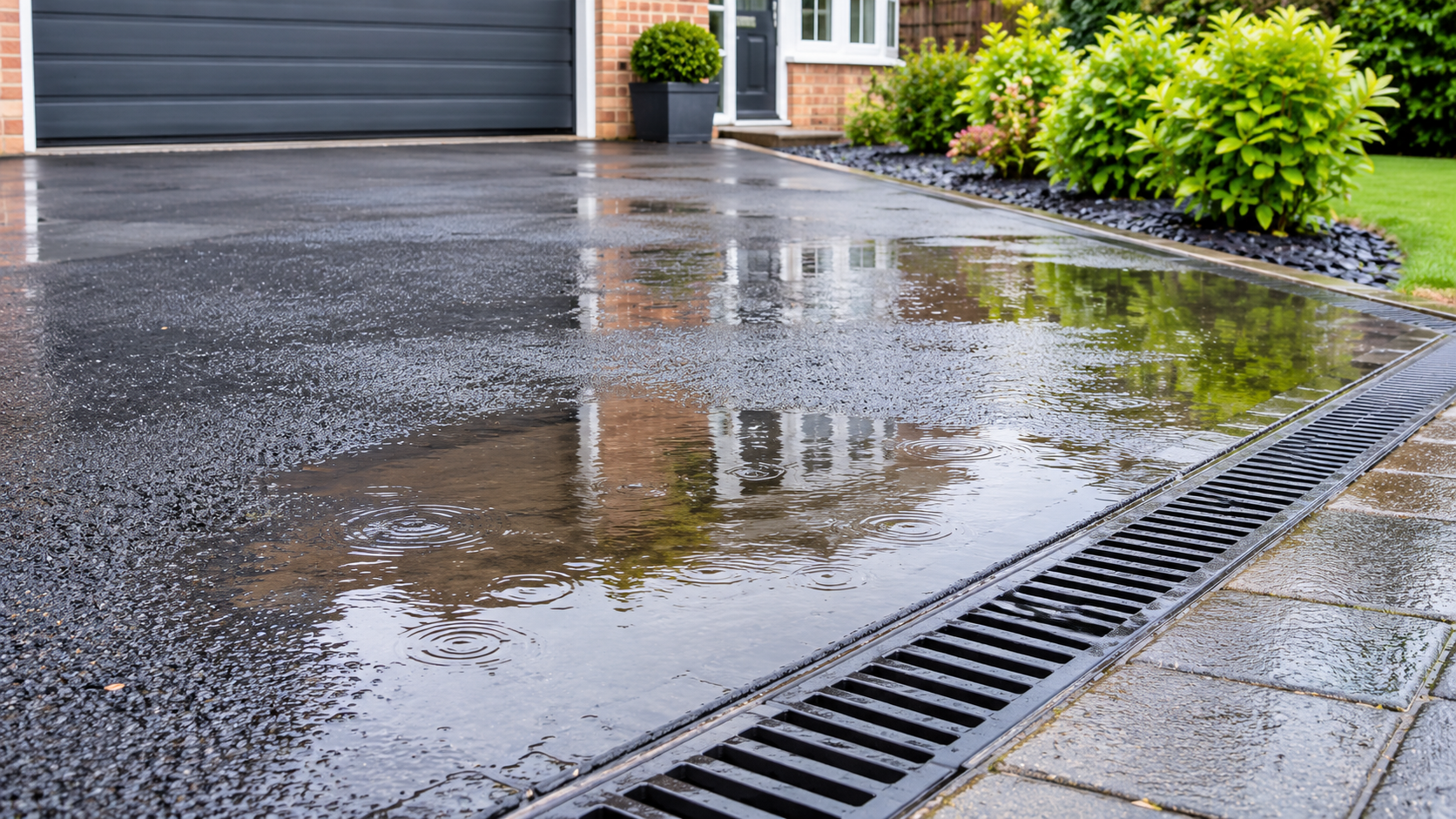
Puddles that hang around after the rain has gone are more than an annoyance. Left alone, water pooling on a driveway can weaken the surface, freeze into a slip hazard and push water towards your home’s foundations.
The good news is that most driveway drainage problems are fixable once you know what is causing them. This guide covers the common causes, the most effective driveway drainage solutions and how to stop the problem returning. It is written from the viewpoint of a UK surfacing contractor who sees these issues on site every week.
What Causes Water Pooling on a Driveway?
Water follows gravity. If it has nowhere to go, it sits. These are the usual culprits.
Poor falls and gradients. A driveway needs a gentle slope so surface water runs off. As a general rule, a fall of around 1:80 is the minimum, and many installers prefer a little more on tarmac. If the original build was too flat or the base has settled, hollows (often called “birdbaths”) form and hold water.
Sunken or damaged base. Weak sub-base material, poor compaction or years of heavy vehicles can cause the surface to dip. Water collects in those dips and speeds up further damage.
Blocked or missing drainage. Channel drains, gullies and soakaways clog with leaves, silt and debris. A clogged drain behaves as if it isn’t there.
Impermeable surfacing. Solid surfaces such as standard concrete and tarmac don’t let water through, so every drop has to be directed somewhere. If that planning was skipped, pooling is likely.
Tree roots and ground movement. Roots can lift and crack surfaces, creating low spots and broken edges that trap water.
Poor ground conditions. Heavy clay soil drains slowly. Where the ground is already saturated, a soakaway may struggle to cope.
Why You Shouldn’t Ignore Driveway Surface Water
Standing water causes a chain of problems:
- Surface deterioration: water works into cracks, and frost expansion then widens them into potholes.
- Slip risks: algae, moss and winter ice build up on damp patches.
- Foundation concerns: water running towards the house can affect walls and damp-proof courses.
- Weed growth and staining: block paving joints wash out and plants take hold.
- Reduced kerb appeal and property value: a pooled, stained driveway looks neglected.
Driveway Drainage Solutions That Work
The right fix depends on the cause. Here are the main options.
1. Channel (linear) drains
A channel drain is a long, narrow drain set into the surface, usually across the driveway entrance or at the foot of a slope. It intercepts water before it reaches the road or your property. It is one of the most popular driveway drainage solutions because it is neat, effective and works with almost any surface.
2. Soakaways
A soakaway is a pit filled with aggregate or crates that lets water drain slowly into the ground. It suits properties with free-draining soil but needs proper sizing and positioning. It should sit well away from buildings.
3. Regrading and resurfacing
If the problem is a poor gradient or a sunken area, drains alone won’t solve it. Cutting out the affected area, rebuilding the sub-base and relaying the surface to correct falls fixes the cause rather than the symptom.
4. Permeable surfacing
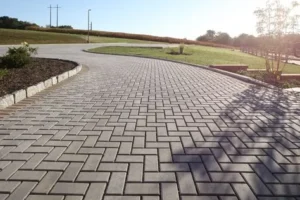
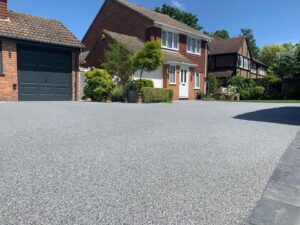
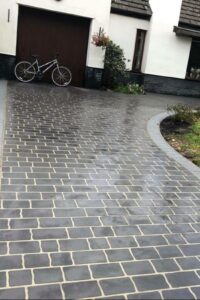
Instead of moving water away, permeable surfaces let it drain through. Resin-bound surfacing is a leading example: it is porous when laid correctly, helping rain pass through to a suitable base below. Permeable block paving with open joints works in a similar way. These options are a form of sustainable drainage (SuDS) and reduce runoff.
5. Maintenance and clearing
Sometimes the answer is simple. Regularly clear gullies, rake out channel drains and jet-wash silted joints.
Which Surface Is Best for Driveway Drainage?
Surface | Drainage behaviour | Best for |
Resin bound | Permeable when installed on a porous base | Water management, a smooth modern finish |
Water drains through open joints | Decorative drives with SuDS compliance | |
Impermeable; needs correct falls and drains | Cost-effective, durable driveways | |
Standard concrete | Impermeable; needs falls and drains | Strong, low-maintenance surfaces |
No surface is “best” in every case. The right choice depends on your gradient, soil type and budget. A site survey makes the decision straightforward.
UK Rules You Should Know
In England, laying a large impermeable surface over a front garden may need planning permission unless rainwater drains to a permeable area within your property or you use a permeable material. The threshold is generally five square metres. Rules vary, so check with your local council before starting.
How to Prevent Water Pooling on Your Driveway
Prevention is cheaper than repair. Keep these habits in mind:
- Plan the falls first. Good drainage is built in at the design stage, not added later.
- Use a properly compacted sub-base. Most settlement problems start underneath.
- Install drains where water naturally collects, especially at the base of slopes and across entrances.
- Direct downpipes carefully. Roof water should not discharge onto your driveway.
- Clear debris regularly, particularly in autumn.
- Fix cracks early, before frost and water do further damage.
- Choose permeable materials where ground conditions allow.
Can You Fix Driveway Drainage Yourself?
Clearing a blocked gully is an easy DIY job. Regrading, installing channel drains or building a soakaway is different. Poorly executed work can move the problem to your neighbour’s boundary or the highway. For anything beyond routine maintenance, a professional assessment saves money in the long run, and it pays to understand why you need professional surfacing contractors before you hire.
Fix Your Driveway Drainage Problems with 1st Choice Surfacing
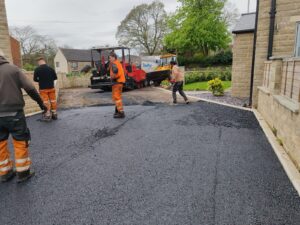
At 1st Choice Surfacing, we design and install tarmac, resin bound and block paved surfaces across West Yorkshire, built with proper falls, solid foundations and drainage that works. Whether you need a drain installed, a sunken area rebuilt or a full resurface, we will survey the site, explain your options in plain English and quote clearly.
Ready to put an end to puddles? Call 0113 254 9638 or request your free quote online today.
Ready to put an e
Frequently Asked Questions
How do I stop water pooling on my driveway?
Identify the cause first. Blocked drains need clearing, low spots need regrading, and flat surfaces may need channel drains or a permeable resurface.
How much does driveway drainage cost?
It varies with size, access, ground conditions and the method chosen. A site visit is the only reliable way to provide an accurate quote.
Is resin bound good for drainage?
Yes, when installed on a suitable porous base, resin-bound surfacing lets water pass through rather than sit on top.
Do I need planning permission?
Possibly, if you are paving over five square metres of front garden with an impermeable surface; always confirm with your local authority.