
Got a road on site that’s seen better days? Cracks running across the tarmac, potholes appearing after every bit of rain, maybe a few complaints from staff or delivery drivers? You’re not alone — it happens to almost every commercial site eventually and it’s usually a sign that commercial road resurfacing needs to move up your to-do list.
At 1st Choice Surfacing, we’ve seen this exact situation play out across all kinds of sites — retail parks, schools, warehouses, offices, you name it. So we put together this guide to walk you through it in plain terms: how to spot the warning signs, what it’s actually going to cost, what the work involves and what to check before you hire someone. No jargon, no fluff — just what you need to make a confident decision.
What Is Commercial Road Resurfacing?
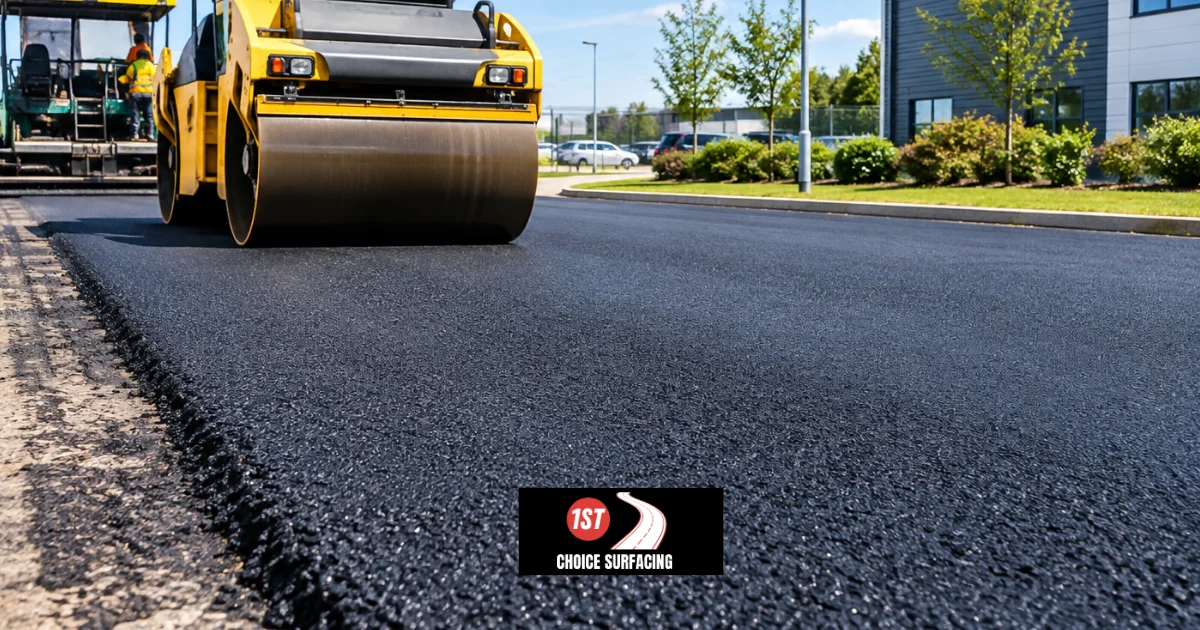
Put simply, commercial road resurfacing means stripping back or repairing a worn-out road surface and laying a fresh layer of asphalt or tarmac over the top. It’s the go-to fix for private roads, access routes, industrial estates and busy car parks that take a beating from daily traffic.
It’s not the same as slapping a patch over a pothole and calling it a day. Resurfacing treats the whole area — bringing back strength, a smooth finish and proper drainage across the full stretch of road. A lot of businesses end up combining this with car park surfacing work too, since access roads and car parks tend to wear out around the same time and doing both together usually gives a much more consistent, professional-looking result.
Signs Your Commercial Road Needs Resurfacing
Wondering if it’s actually time to get this sorted or if it can hold on another year? Here’s what to look out for.
Cracking, Potholes and Surface Breakup
A few hairline cracks might not look like much, but they let water sneak into the layers underneath and that’s when things start going downhill fast. Once potholes or crumbling edges show up, the damage has already spread beneath the surface.
Poor Drainage and Standing Water
If puddles are sticking around long after the rain’s stopped, that’s usually a sign the surface has sunk or lost its camber — the gentle slope that lets water run off properly. And in winter, that standing water turns to ice, which is a hazard nobody wants on their site.
Faded Line Markings and Safety Hazards
Worn parking bays, arrows you can barely see, crossings that have all but disappeared — these all add up to confusion and risk, especially for visitors or delivery drivers who don’t know their way around.
Increasing Vehicle or Pedestrian Complaints
If people are starting to mention rough patches, tyre damage or trip hazards, it’s worth listening. By the time complaints start coming in, the problem’s usually been building for a while.
Why Road Resurfacing Matters for Commercial Sites
Safety and Liability
A damaged surface is an accident waiting to happen — trips, falls, vehicle damage, you name it. And that leaves a business open to claims that are entirely avoidable with regular upkeep.
Appearance and First Impressions
Your car park or access road is often the very first thing a client or customer sees. A smooth, well-marked surface says “we take care of business,” while cracked, patchy tarmac sends the opposite message.
Long-Term Durability
Getting resurfacing done at the right time — rather than waiting until things fall apart — stretches out the life of the road and saves you from needing major work far more often.
Property and Asset Value
A road or car park that’s well looked after protects the overall value of a commercial property, which really matters if you’re heading towards a lease renewal, sale or valuation.
Key Factors to Consider Before Resurfacing
How to Assess a Road's Condition
- Visual Inspection A trained surveyor will walk the whole site, checking for cracking, rutting, potholes and general wear — not just the bits that are obviously bad.
- Core Sampling This means taking small samples from the existing surface to see how the layers underneath are holding up. It helps figure out whether resurfacing alone will do the job or whether deeper repairs are needed first.
- Drainage Evaluation A thorough assessment also looks at how water moves across the site, since poor drainage is one of the biggest reasons surfaces fail before their time.
Why Contractor Experience and Certifications Matter
- Track Record and Experience Look for a surfacing contractor who’s handled sites like yours before. Retail, industrial, education and healthcare sites all come with different access requirements and safety considerations.
- Industry Certifications (CHAS, CSCS, City & Guilds) Certifications like CHAS, CSCS and City & Guilds are a good sign a contractor takes health, safety and quality seriously. Don’t be shy about asking to see these before signing anything.
- Client References and Past Projects A contractor worth hiring should be more than happy to show you photos, past projects or references from other commercial jobs they’ve completed.
How Much Does Commercial Road Resurfacing Cost?
- What Affects the Price (Area, Access, Material, Groundworks) There’s no single figure for road resurfacing cost — it depends on the size of the area, how easy the site is to get to, what type of asphalt or tarmac is used and whether any groundworks or drainage fixes need doing beforehand.
- Initial Cost vs Long-Term Savings Yes, a proper resurfacing job costs more upfront than another round of patch repairs. But over 10 to 15 years, it usually works out cheaper, since it puts off the need for a full rebuild much further down the line.
- Getting an Accurate Quotation Always insist on a site visit before accepting a quote. Any price given without actually seeing the site rarely factors in access issues or the real condition of what’s underneath.
Environmental Impact and Sustainability
- Sustainable and Recycled Materials More contractors these days are using recycled asphalt or warm-mix products, which cut down on carbon emissions during production without sacrificing strength.
- Waste Management on Site A contractor who does things properly will remove and recycle the old surface material rather than shipping it straight to landfill.
- Green Certifications and Compliance Worth asking whether a contractor follows environmental best practice and whether they can provide compliance documentation if your organisation needs it.
Regulations and Compliance for Commercial Road Surfaces
BS EN Standards
Commercial surfacing work should meet the relevant British and European standards (BS EN) for materials and installation — this is what keeps the finished surface safe and built to last.
Drainage and SuDS Requirements
Plenty of commercial sites now need to follow SuDS (Sustainable Drainage Systems) guidelines, which manage rainwater responsibly and help cut flood risk.
Health & Safety Compliance
Resurfacing on a live commercial site has to follow strict health and safety rules — safe pedestrian routes, clear signage and proper traffic management while the work’s happening.
The Commercial Road Resurfacing Process, Step by Step
- Planning and Site Design The contractor surveys the site, works out access routes and drainage falls and agrees materials and timings with you before anything starts.
- Preparing the Existing Surface Old, damaged material gets removed or planed off and anything underneath — a weak sub-base, a drainage fault — gets sorted first.
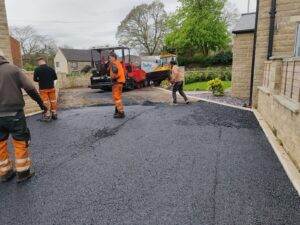
- Applying the New Surface Layer Fresh asphalt or tarmac goes down, gets compacted and is levelled to the right depth and camber so water runs off properly.
- Final Touches and Quality Checks Line markings, signage, bollards and kerbs go back in and a final inspection wraps things up before handover.
Minimizing Disruption to Your Business During Resurfacing
Phased or Out-of-Hours Working
A lot of commercial jobs get split into sections or done overnight and at weekends, so the site can keep running as normal during business hours.
Keeping Access Open During Works
A decent contractor will map out temporary access routes so staff, deliveries and customers can still get in and out safely while the work’s ongoing.
Realistic Project Timelines
Ask for a clear, written timeline before anything kicks off, including what happens if the weather turns — so you know exactly what to plan around.
Maintenance Tips to Extend the Life of Your Surface
- Regular Cleaning Sweeping away debris, leaves and standing water goes a long way toward stopping early surface breakdown.
- Seal Coating A protective seal coat every few years shields the surface from UV damage, oil spills and general wear and tear.
- Prompt Repairs Fixing small cracks and potholes the moment they show up stops a minor issue turning into a much bigger, pricier one.
- Scheduled Inspections A yearly check-up with a surfacing contractor helps catch problems early, before they become a safety issue or a budget headache.
Frequently Asked Questions
How long does commercial road resurfacing last?
A properly installed commercial surface should last somewhere between 15 and 25 years, depending on traffic levels, the quality of materials used and how well it’s maintained.
Can resurfacing be done without closing the road completely?
In most cases, yes. Phased working, out-of-hours schedules or temporary access routes can keep your site running while the work goes ahead.
What's the difference between resurfacing and full reconstruction?
Resurfacing replaces the top layer of a road that’s still structurally sound, while full reconstruction rebuilds everything from the sub-base up. Resurfacing is quicker, cheaper and usually all you need if the base is still in decent shape.
How much does commercial road resurfacing cost per m²?
It really depends on site size, access and materials — a proper site survey is the only reliable way to get an accurate road resurfacing cost for your specific job.
Do you offer a warranty on resurfacing work?
Any contractor worth hiring should offer a workmanship warranty on commercial road resurfacing projects, so you’ve got peace of mind that the job’s built to last.
Get Your Free Commercial Road Resurfacing Quote
Whether you need a full commercial road resurfacing project or you’re also thinking about giving your car park a refresh, the team at 1st Choice Surfacing is here to help. We handle car park surfacing for retail, industrial, and office sites right across the UK, including car park surfacing in Leeds for businesses closer to home.
Get in touch today for a free, no-obligation site survey and quote.