
Picking the right surface is one of the bigger decisions on any commercial project. Whether you’re resurfacing a car park, an industrial estate, a warehouse yard or a business access road, the material underneath will shape how long it lasts, what it costs to maintain and how it holds up under daily use. People throw around “tarmac” and “asphalt” as if they’re the same thing, but they’re not — each has its own strengths and knowing what sets them apart makes it a lot easier to pick the right one for your site.
What Is the Difference Between Tarmac and Asphalt?
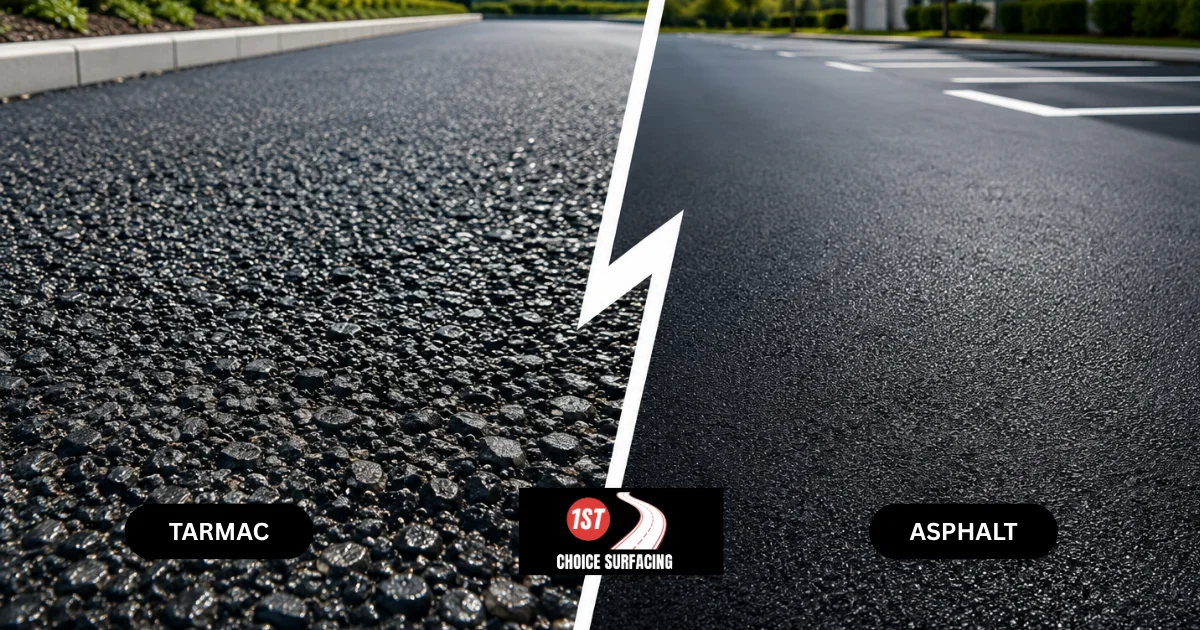
At a glance, tarmac and asphalt can look almost identical. The real difference comes down to the binder holding everything together. Tarmac (or tarmacadam) is crushed stone bound with tar, while asphalt is made from aggregates — crushed stone, sand, gravel — mixed with bitumen, a petroleum-based binder. Asphalt tends to be the stronger, more flexible of the two, and it copes better with heavy traffic and shifting weather, which is why it’s usually the go-to for busier commercial sites. Tarmac still has its place, particularly where the traffic is lighter and keeping costs down matters more than squeezing out every extra year of lifespan. Which one actually suits your project comes down to traffic levels, budget and how much maintenance you’re willing to take on down the line.
What Is Tarmac?
Tarmac’s been laid on UK roads and commercial sites for generations and it’s still a solid choice wherever traffic stays light to moderate.
How Tarmac Is Made
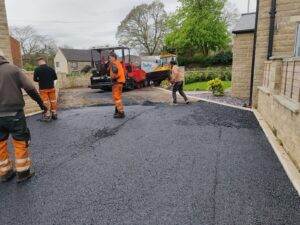
The process is fairly straightforward: crushed stone gets coated in tar, then laid and compacted into a smooth, durable surface. Interestingly, a lot of modern roads are actually surfaced with asphalt these days, but people still call any black road surface "tarmac" out of habit.
Key Benefits and Commercial Uses
Tarmac's popular because it's fairly affordable, quick to get down and easy enough to patch up if something goes wrong. It also grips reasonably well in the wet, which counts for a lot given our weather.
Our commercial tarmac surfacing service is commonly used for:
- Business access roads
- Staff parking areas
- Private industrial entrances
- Farm roads
- Temporary access routes
- Light commercial developments
What Is Asphalt?
For a lot of commercial surfacing jobs, asphalt wins out simply because it lasts longer and performs better over time.
How Asphalt Is Made
Asphalt comes together by mixing aggregates with hot bitumen, then laying and compacting the material while it's still workable. The result is a dense, smooth surface built to take a beating from heavy traffic.
Key Benefits and Commercial Uses
Asphalt brings strength, flexibility and solid long-term performance to the table. It doesn't ask for much maintenance over its life and copes well with heavy traffic, which is exactly why it's such a common choice for busy commercial sites.
Our commercial asphalt surfacing service is commonly used for:
- Commercial car parks
- Industrial estates
- Warehouse yards
- Distribution centres
- Retail parks
- Business parks
- Public roads
- Airport surfaces
Tarmac vs Asphalt: Side-by-Side Comparison
Feature | Tarmac | Asphalt |
Composition | Crushed stone with tar | Aggregates with bitumen |
Appearance | Slightly rougher finish | Smooth, consistent finish |
Durability | Good for lighter traffic | Excellent for heavy traffic |
Lifespan | Around 15–20 years | Around 20–30 years with maintenance |
Installation Time | Quick | Quick with specialist equipment |
Maintenance | Easy to repair | Lower long-term maintenance |
Cost | Lower initial cost | Higher upfront investment |
Load Capacity | Light to medium traffic | Heavy commercial vehicles and HGVs |
Weather Resistance | Good | Excellent |
Sustainability | Limited recycling | Highly recyclable |
Best Commercial Applications | Access roads, staff parking | Car parks, warehouses, industrial estates, retail parks |
Which Surface Is Best for Commercial Projects?
Really, it comes down to how the site gets used day to day.
Commercial Car Parks: Asphalt gives you a smoother finish and stands up well to constant vehicle traffic.
Industrial Estates & Warehouses: Asphalt makes the most sense here — it’s built to withstand HGVs, forklifts and a steady stream of deliveries.
Schools & Educational Facilities: Either material can work, though asphalt tends to be the preferred pick for playgrounds and parking areas thanks to its durability.
Retail Parks & Shopping Centres: Asphalt gives you an attractive, long-lasting surface that can handle heavy footfall and busy customer traffic.
Access Roads & Business Parks: Tarmac is the more budget-friendly option for lighter traffic, while asphalt suits the busier routes better.
Distribution Centres & Logistics Hubs: Asphalt is usually the preferred choice, mainly because of its load-bearing capacity and the extra years it offers over its lifespan.
How to Choose the Right Surface
Before deciding between tarmac and asphalt, it helps to think through:
- Expected traffic volume
- Frequency of heavy vehicles and HGVs
- Available budget
- Required lifespan
- Maintenance requirements
- Environmental goals
- The type of commercial property
Getting a professional site assessment done can take a lot of the guesswork out of choosing the right material.
Frequently Asked Questions
How long do tarmac and asphalt last?
With proper installation and upkeep, tarmac generally lasts 15 to 20 years, while asphalt can go 20 to 30 years or more depending on traffic and how well it’s maintained.
Can they be repaired?
Yes, in most cases. Both surfaces can typically be patched up rather than fully replaced, and getting repairs done promptly stops damage spreading and helps the surface last longer.
Which is better for heavy commercial vehicles?
Asphalt’s usually the better bet for industrial estates, warehouses and any site with frequent HGV traffic, thanks to its extra strength and durability.
Are they environmentally friendly?
Modern asphalt is highly recyclable and gets reused in new surfacing projects fairly often, which helps cut down on waste and preserve raw materials.
How do I choose the right material?
It comes down to your budget, expected traffic, how much maintenance you’re prepared for and the type of commercial property you’re working with. A proper site assessment from a professional makes this decision a lot easier.
Why Choose 1st Choice Surfacing for Commercial Surfacing Projects?
At 1st Choice Surfacing, we handle commercial surfacing across West Yorkshire, Manchester and the surrounding areas. Our team works on tarmac, asphalt, resin bound, block paving and concrete surfacing for car parks, industrial estates, schools, retail parks and business developments.
We stick to quality materials, proper equipment and installation methods that have been proven to work, and every project meets the relevant safety standards. Whether it’s a new installation, a resurfacing job or a repair, our focus stays on durable, cost-effective results that hold up for years, not just months.
For residential driveway work, our trusted partner A1 Driveways covers domestic surfacing across the region.
Making the Right Choice for Your Commercial Surfacing Project
Both tarmac and asphalt have their place — it just depends what your project needs. Tarmac makes sense for lower-traffic commercial areas where keeping costs down matters most, while asphalt brings better durability, a longer service life and stronger performance for busier commercial environments.
Not sure which one’s right for your site? Working with an experienced commercial surfacing contractor takes the guesswork out of it. At 1st Choice Surfacing, we’re here to deliver reliable surfacing solutions built around your business, giving you a surface that performs well now and holds up for years to come.