
If you’re planning a new driveway and block paving has caught your eye, you’re not alone. It’s one of the most popular driveway surfaces across the UK, and for good reason. That distinctive, neatly patterned finish transforms the front of a property almost instantly.
But is it right for your home? That depends on quite a few factors: your budget, your willingness to maintain it, your soil type, and what finish you’re really after.
In this guide, we’ll walk through everything you need to know about block-paving driveways, honestly and clearly. No fluff, no sales pitch. Just the real advantages, the genuine drawbacks, and everything in between to help you make a confident decision.
What Is Block Paving?
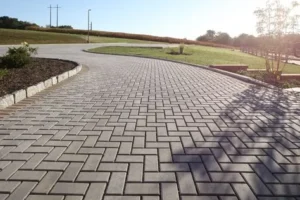
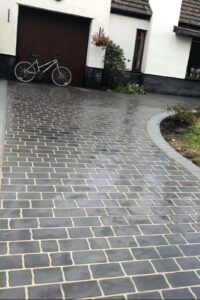
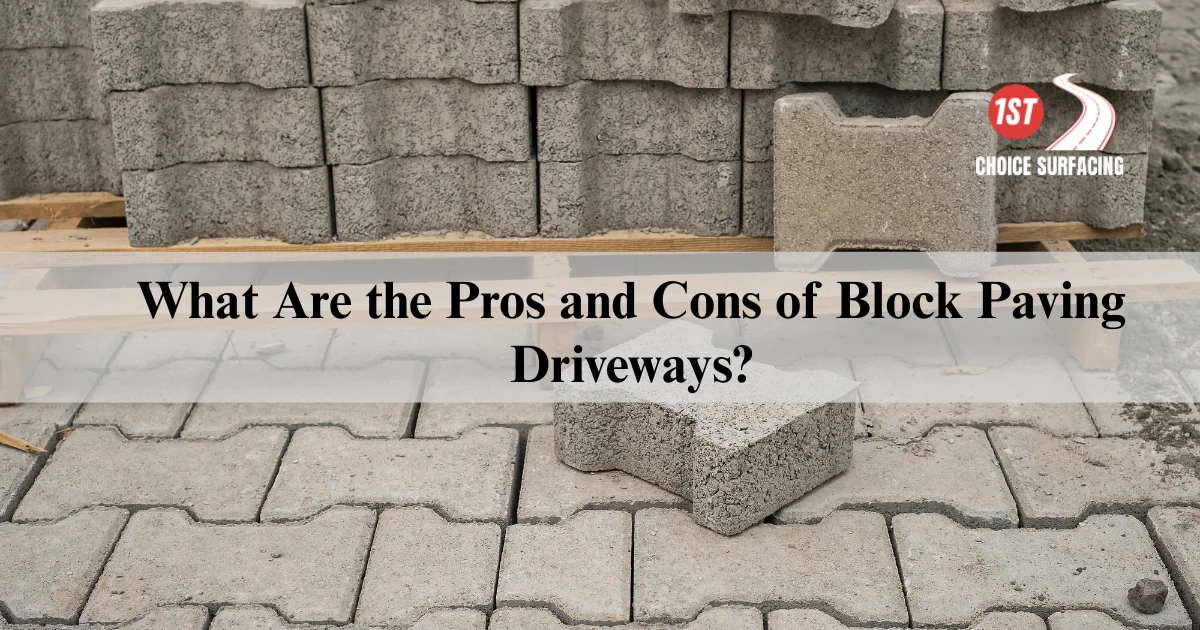
Block paving, sometimes called brick paving or sett paving, involves laying individual blocks or bricks onto a prepared sub-base, usually in a decorative pattern. The blocks sit in a bed of sharp sand and are locked together with kiln-dried jointing sand swept into the gaps.
They come in a wide range of materials:
- Concrete blocks — the most common and cost-effective
- Clay bricks — more traditional, often used in heritage or period properties
- Natural stone setts — granite, sandstone, or porcelain; premium but stunning
- Permeable or porous blocks — designed to let water drain through, often required by planning law.
The versatility in materials, colours, and laying patterns, herringbone, stretcher bond, basket weave, makes block paving one of the most customisation surfacing options available.
The Pros of Block Paving Driveways
1. Exceptional Kerb Appeal
Let’s be honest, this is often the first reason people consider block paving. A well-laid block paved driveway looks premium. It frames your property, adds visual structure, and signals that the home is well cared for. Whether you go for a classic herringbone in charcoal grey or a warm blend of biscuit and buff, the effect is immediate and impactful.
From a property value perspective, this matters. A quality driveway can add meaningful value to a home, and block paving is one of the surfacing choices estate agents tend to view most favourably.
2. Long Lifespan — Up to 25 Years or More
When properly installed on a solid sub-base, block paving driveways are genuinely long-lasting. Many installations in the UK have been performing well for two to three decades with only routine maintenance. The longevity depends heavily on the quality of the sub-base preparation and the installation itself, which is why choosing an experienced contractor matters enormously.
Compare that to a poorly laid tarmac driveway that begins cracking within five years, and the long-term value of block paving becomes much clearer.
3. Easy Repairs — Replace Individual Blocks, Not the Whole Surface
This is one of block paving’s most practical advantages, and one that rarely gets enough attention. If a section of your driveway gets damaged, say a block cracks, a utility company digs through it, or subsidence affects a small area, you can lift and relay just those affected blocks without disturbing the rest.
With tarmac or poured concrete, localised repairs are far more visible and often require patching the whole bay or section. With block paving, a repair done well is virtually invisible.
4. Strong Load-Bearing Capacity
Block paving, if installed professionally with a base that is at least 150mm deep (usually consisting of 150mm MOT Type 1 Hardcore under a sand bed), is capable of handling loads from vehicles. The weight of a vehicle is distributed across all blocks, not focused on one single block, which is another reason why block paving performs so well with continual use from cars driving over it.
When block paving is installed properly, it is suitable as a structural option for driveways intended for heavier vehicles, such as vans, SUVs or light commercial vehicles.
5. Excellent Design Flexibility
Few other surfacing materials offer the same range of design options as block paving. You can mix colours to create borders, contrast patterns, or even replicate the look of a traditional cobbled courtyard.
Common laying patterns include:
- Herringbone, the most structurally stable; ideal for driveways
- Stretcher bond — a classic brick look
- Basketweave — decorative and eye-catching
- Circular fan patterns — popular for feature areas and forecourts
This flexibility means block paving can suit everything from a modern new-build to a Victorian terrace.
6. Permeable Options Support Drainage Compliance
Homeowners in England have been required to get planning permission for a non-permeable hard surface greater than five square meters at the front of their creativity since 2008. Permeable block paving provides a compliant and visually appealing way to satisfy this need by allowing water to seep into the soil through the gaps created by the blocks’ design.
If you want to reduce flooding risk, prevent run-off from getting into the drainage system and satisfy local authority requirements while still appearing nice, permeable block paving is the best solution for you.
7. Slip Resistance
The texture of concrete and clay blocks provides reasonable grip underfoot, especially when new. For households with elderly residents or young children, this can be a genuine safety advantage compared to polished or smooth surfaces.
The Cons of Block Paving Driveways
1. Higher Upfront Cost
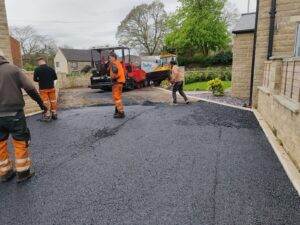
There’s no getting around it, block paving costs more to install than tarmac. A standard tarmac driveway in the UK might cost £40–£70 per square metre, while block paving typically starts from around £70–£120 per square metre depending on the block type, pattern complexity, and regional labour rates.
For a typical 40–50 square metre driveway, this could mean a total investment of £3,000 to £6,000 or more. Natural stone and porcelain options push that figure higher still. That said, when you factor in lifespan, repairability, and property value uplift, the long-term cost-per-year equation can make block paving very competitive.
2. Weed and Moss Growth in the Joints
There are many complaints to be made against block paving driveways but this would be one of the most common. The jointing sand in between the blocks provides an ideal environment for weed seeds to germinate and mosses to spread, particularly in shady or damp areas.
Therefore, it is necessary to regularly maintain the jointing sand in our block paving driveway with periodic application of a sealant to inhibit growth, and the use of weed killer may also need to be performed once or twice each calendar year. Use of polymeric jointing sand allows for harder sets and is much less susceptible to machine or hand removal of weeds than conventional kiln-dried sand.
3. Can Shift or Sink Over Time
Block paving relies on the blocks sitting on a bed of compacted sharp sand over a hardcore sub-base. Over time, particularly if the sub-base wasn’t laid deep enough, or if water washes out the sand bed, individual blocks can sink or shift, developing uneven areas.
This is more common with cheaper installations where corners are cut on the groundworks. A reputable contractor who prepares the sub-base properly (100–150mm of compacted hardcore is the minimum for residential driveways) will significantly reduce this risk.
4. Requires Periodic Re-Sanding and Sealing
To keep block paving looking its best and performing well, you’ll need to top up jointing sand every few years as it washes out, apply sealant every 3–5 years to protect against oil stains and weed ingress, and re-treat with weed killer and moss remover seasonally in prone areas.
None of this is particularly costly or difficult, but it is an ongoing commitment. If you’d prefer a set-it-and-forget-it driveway, block paving may not be your best fit.
5. Oil Stains Can Be Difficult to Remove
Block paving is porous, particularly concrete blocks, which means oil, fuel, and other vehicle fluids can penetrate the surface if not treated promptly. Unsealed blocks are especially vulnerable.
The best defence is to seal your driveway after installation and reseal periodically. Applying a sealant creates a protective barrier that makes spills far easier to clean. If your driveway has already been stained, specialist degreasers can help, but deep stains may not fully disappear.
6. Colour Fading Over Time
Over time, UV rays from the sun will cause certain parts of a patio made from concrete block paving to fade, especially if they’re on the southern side or are subjected to de-icing salt in the winter. Whereas clay bricks and natural stone are more resistant to fading, the application of sealants to a concrete block pavement can prevent or reduce the rate of fading.
7. Not Ideal if Sub-Base Is Already Compromised
If your driveway has a lot of clay, if there is too much movement in the earth under it, and/or if there is a lot of water that does not get drained properly, block paving is not going to help with the problems below. In these types of areas, the sub base work will require a lot more effort and be more expensive than laying the blocks. A proper site survey will identify all of these issues before the blocks are laid.
Block Paving vs Other Driveway Surfaces
To put block paving in context, here’s an honest comparison against the other main driveway options:
Feature | Block Paving | Tarmac | Resin Bound | Concrete |
Upfront Cost | Medium–High | Low | Medium–High | Medium |
Life span | 20–25+ yrs | 15–20 yrs | 15–25 yrs | 20–30 yrs |
Maintenance | Moderate | Low | Low | Low |
Repairability | Excellent | poor | Excellent | Poor |
Kerb Appeal | High | Moderate | High | Moderate |
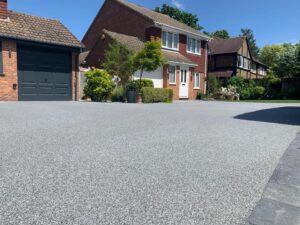
Permeable Option | Yes | No (standard) | Yes | No |
Weed Risk | Moderate | Low | Very low | Low |
No surface is perfect for everyone, the right choice depends on your priorities, budget, and the specific conditions of your property.
How Long Does Block Paving Last?
With proper installation and reasonable maintenance, a block paving driveway can last 20 to 25 years, and many last considerably longer. The key variables are:
- Quality of the sub-base preparation — the single most critical factor
- Quality of the blocks themselves — premium clay or high-density concrete blocks outlast budget options
- Whether it’s been sealed — sealing dramatically extends both appearance and structural performance
- Traffic levels — residential driveways with light vehicle use will outlast those under heavier pressure
Do You Need Planning Permission for Block Paving?
In most residential cases in England, you do not need planning permission for a block paving driveway, provided you use a permeable surface, or the run-off is directed to a lawn, border, or soakaway rather than the road or a public drain.
If you install a non-permeable surface over five square metres in the front garden, planning permission may be required. In conservation areas or on listed properties, additional restrictions may apply. Always check with your local planning authority before committing.
How to Maintain a Block Paving Driveway
Good maintenance doesn’t need to be time-consuming. A simple routine will keep your block paving driveway looking great for years:
Frequency | What to Do |
Every few months | Sweep debris and leaves. Check joints for weed growth and treat early. |
Twice a year | Apply block paving weed killer and moss remover. Inspect for shifted blocks. |
Every 3–5 years | Re-apply a quality block paving sealant. Top up jointing sand where washed out. |
As needed | Treat oil/fuel spills with degreaser immediately. Lift and relay sunken blocks. |
Is Block Paving the Right Choice for You?
Block paving is an excellent choice if you:
- Want a driveway that significantly improves your home’s kerb appeal
- Are willing to invest more upfront for long-term performance
- Value the ability to repair sections individually rather than resurface everything
- Like design flexibility, colours, patterns, borders
- Need a permeable solution for planning compliance
It may not be your best option if you:
- Want the lowest possible upfront cost (consider tarmac)
- Want an almost maintenance-free surface (consider resin-bound)
- Have significant ground movement or drainage issues requiring extensive groundworks
Why Choose 1st Choice Surfacing for Your Block Paving Driveway?
At 1st Choice Surfacing, we’ve been delivering commercial and residential surfacing solutions across West Yorkshire, including Leeds, Bradford, and Manchester, with a focus on getting the groundworks right before a single block goes down.
Our team of experienced block paving contractors doesn’t cut corners on sub-base preparation, materials, or finishing. We survey your site, discuss your design preferences, and give you a clear, honest quote with no hidden costs.
Whether you’re looking for a traditional herringbone driveway in your chosen block colour, or a decorative border design that complements your property’s character, we have the skill and experience to deliver it properly.
Ready to get started? Contact us today for a free, no-obligation consultation and quote.
Block Paving FAQs:
How much does a block paving driveway cost in the UK?
Expect to pay £70 to £120 per m². A standard driveway (40–50m²) typically costs between £3,000 and £6,000, depending on material quality and labor.
How long does block paving last?
With a solid sub-base and regular care, it lasts 20 to 25 years. Individual blocks can be replaced easily, potentially extending its lifespan indefinitely.
Is block paving high maintenance?
It requires moderate maintenance. You’ll need to treat weeds seasonally, top up jointing sand every few years, and reseal the surface every 3–5 years.
What is the best block paving pattern?
Herringbone (45° or 90°) is best for driveways. Its interlocking design handles vehicle weight effectively and prevents blocks from shifting under pressure.
Do I need planning permission?
Usually, no, as long as the surface is permeable or drains into your own land. Permission is required if water drains onto public roads or for non-permeable areas over 5m².
Can block paving be laid over an existing driveway?
It is not recommended. For a long-lasting finish, the old surface should be removed to ensure a proper, level sub-base is installed.
How do I stop weeds growing?
Use polymeric jointing sand, apply a quality sealant, and use weed killer in spring/autumn. This prevents seeds from taking root in the joints.
Is block paving or tarmac better?
Block paving offers better kerb appeal and easier repairs. Tarmac is cheaper and faster to install but harder to patch invisibly and has less “wow” factor.